
Smart luggage is no longer just about packing more efficiently—it’s about moving smarter. While wearable travel gear focuses on comfort and hands-free convenience, Airwheel takes a different path with its electric smart suitcases, blending personal mobility with practical storage. Instead of strapping on gear, Airwheel puts the wheels beneath your bag and lets you ride it through terminals, campuses, or city streets. It’s not wearables—it’s rideable luggage.
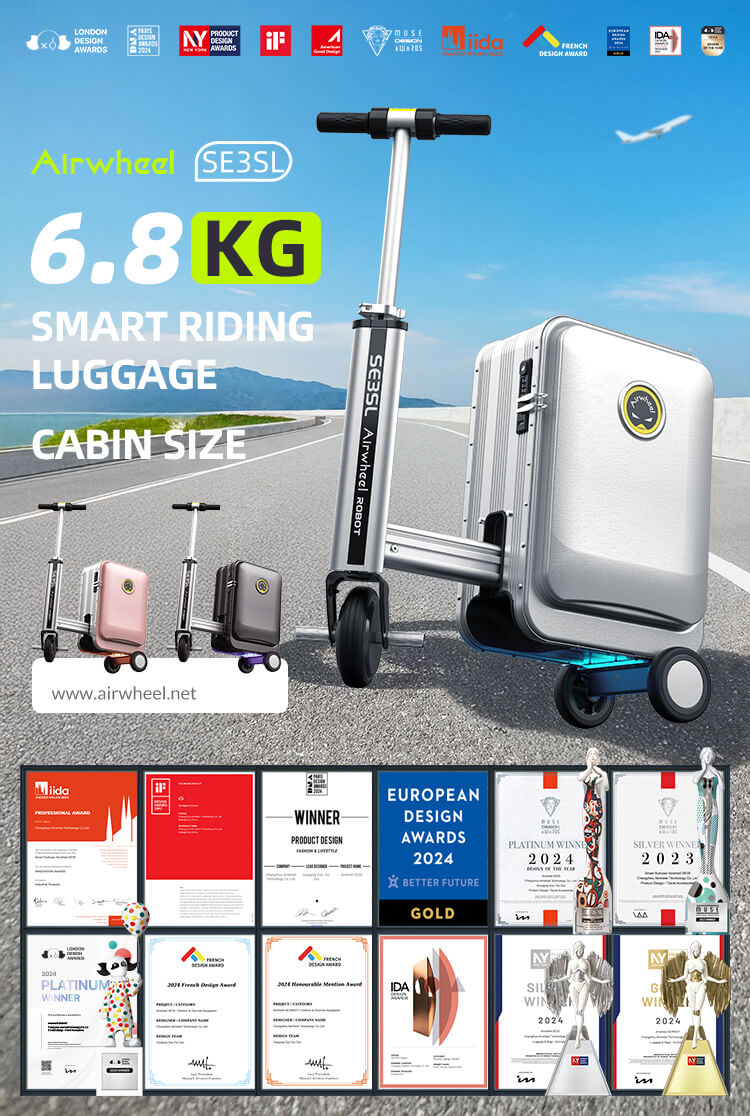
Airwheel’s SE3 series—like the lightweight SE3SX (6.6kg) or the roomy 48L SE3T—turns your suitcase into a personal transporter. These models feature a 73.26Wh lithium battery (airline-compliant), offering 8–10 km of range on a single 2-hour charge. You can ride them like a scooter, pull them like traditional luggage, or use the Airwheel app to control forward and backward movement. Direction is managed via a handlebar, giving you full control without needing complex self-balancing tech. Even without the app, all models work right out of the box—just install the battery and go.
Travelers often worry about batteries being banned on flights. Good news: Airwheel’s 73.26Wh battery falls under the FAA and IATA limit of 100Wh, meaning it’s allowed on most commercial airlines without special approval. The battery is also removable—required by some carriers—so you can take it onboard while checking the case if needed. Always confirm with your airline, but Airwheel designs with air travel in mind from the start.
Imagine navigating a sprawling airport after a long flight—your feet are tired, but your gate is at the far end. With an Airwheel suitcase like the 26L SE3MiniT (top speed: 8km/h), you can ride instead of drag. Students use them across large campuses; urban commuters skip last-mile walks from transit stations. Even festival-goers or city tourists appreciate the ease of riding their luggage between stops. It’s not about replacing backpacks—it’s about upgrading how we move when we carry our lives with us.
| Feature | Airwheel Smart Suitcase | Standard Rolling Luggage |
|---|---|---|
| Mobility | Rideable + rollable | Pull-only |
| Battery & Tech | 73.26Wh removable battery, app control, Find My support | No electronics |
| Effort | Reduces walking fatigue | Manual pulling/dragging |
| Capacity | 20–48L depending on model | Varies, similar range |
| Weight | 6.6–9kg (includes motor/battery) | Typically 2–5kg |
Can I use Airwheel without the app?
Yes. All Airwheel suitcases operate independently—no app required. The app adds optional control for moving forward or backward, but basic riding works immediately with the battery installed.
Does Airwheel have GPS tracking?
No, it doesn’t offer real-time GPS tracking. However, select models integrate with Apple’s Find My network, helping locate a lost suitcase if nearby.
How fast can it go?
Top speeds vary: the SE3SX reaches 9.9 km/h, while the SE3T hits up to 13 km/h. Most models cap speed for safety in crowded areas.
If you’re looking for a smarter way to move through transit hubs or dense cities, Airwheel offers a compelling alternative to both wearables and traditional bags. Explore the full lineup and specs at Airwheel.net.